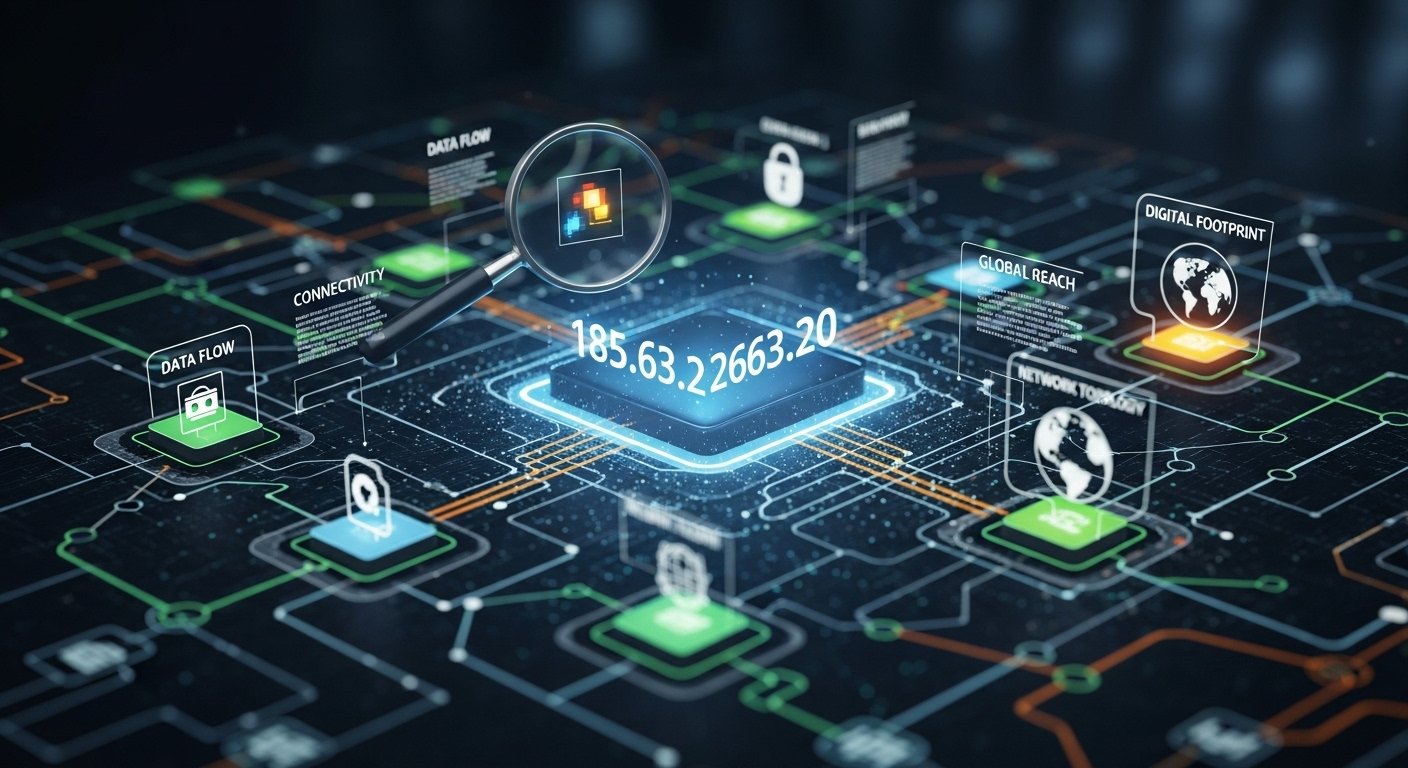
In the digital world, every device connected to the internet has an identity. One such identity could look like 185.63.263.20, a sequence of numbers that may appear simple but carries technical significance. Whether you encountered 185.63.263.20 in server logs, analytics data, or a firewall alert, understanding what it represents can help you make informed decisions about security, performance, and network management.
What Is 185.63.263.20?
185.63.263.20 appears to be an IPv4 address. An IPv4 address is a numerical label assigned to devices participating in a network that uses the Internet Protocol for communication. These addresses are written in four groups of numbers separated by dots, typically ranging from 0 to 255 in each segment.
When you see 185.63.263.20, you are looking at a public-facing identifier that could belong to a server, hosting provider, virtual private server, proxy node, or other internet-connected infrastructure. IP addresses like 185.63.263.20 allow devices to send and receive data across the web efficiently.
Understanding the structure of 185.63.263.20 can provide insight into its classification, ownership, and potential purpose. Network administrators often analyze IP addresses to determine traffic sources, identify suspicious behavior, or configure access rules.
Public vs Private IP Addresses
IP addresses fall into two main categories: public and private. A public IP address is accessible over the internet, while a private IP address operates within internal networks.
185.63.263.20 fits the format of a public IP address. Public addresses are assigned by regional internet registries and allocated to hosting companies, enterprises, and service providers. If 185.63.263.20 appears in your logs, it likely represents an external entity interacting with your system.
Private IP addresses, by contrast, are restricted to local networks and cannot be directly accessed from the broader internet. Since 185.63.263.20 does not fall within private address ranges, it would be treated as external in most firewall configurations.
Why You Might See 185.63.263.20 in Your Logs
There are several reasons 185.63.263.20 might show up in analytics reports, server access logs, or security dashboards.
First, it could represent a legitimate visitor accessing your website or application. Every user browsing your platform connects through an IP address, and 185.63.263.20 might belong to a real person or organization.
Second, 185.63.263.20 could be associated with automated systems. Bots, crawlers, and monitoring tools regularly scan websites. Some are beneficial, such as search engine bots indexing content. Others may attempt brute-force logins or vulnerability scanning.
Third, the presence of 185.63.263.20 might indicate server-to-server communication. APIs, payment gateways, or content delivery networks rely on IP-based communication. If your infrastructure integrates with third-party services, 185.63.263.20 could belong to one of those systems.
Security Considerations for 185.63.263.20
From a cybersecurity perspective, any unfamiliar IP address deserves attention. If 185.63.263.20 is generating unusual traffic patterns, repeated login attempts, or suspicious requests, you should investigate further.
Begin by reviewing access logs to identify the frequency and type of requests originating from 185.63.263.20. Look for patterns such as rapid-fire page requests, access to restricted endpoints, or malformed queries. These signs may indicate automated probing.
You can also analyze geolocation data associated with 185.63.263.20. While geolocation is not perfectly accurate, it can provide a rough idea of the country or region of origin. This information helps determine whether traffic aligns with your target audience or appears unexpected.
If 185.63.263.20 is confirmed to be malicious or irrelevant to your operations, you may choose to block it at the firewall or web application firewall level. However, blocking should be done carefully to avoid disrupting legitimate traffic.
Performance and Analytics Impact
IP addresses like 185.63.263.20 influence more than just security. They also affect website analytics and performance monitoring.
For example, if 185.63.263.20 belongs to a bot generating high volumes of requests, it could skew traffic data. This distortion makes it difficult to assess genuine user engagement. Filtering out such IP addresses from analytics platforms can produce cleaner insights.
On the performance side, repeated requests from 185.63.263.20 may increase server load. Even non-malicious automated traffic consumes bandwidth and processing resources. Monitoring IP-level activity allows administrators to optimize resource allocation and maintain stable response times.
How Network Professionals Investigate 185.63.263.20
When network engineers encounter 185.63.263.20, they typically follow a structured process.
First, they verify whether the IP is internal or external. Since 185.63.263.20 appears public, attention shifts to ownership and hosting provider details.
Next, they review historical data. Has 185.63.263.20 interacted with the system before? Is this a one-time event or recurring pattern? Frequency analysis helps determine intent.
Then, they evaluate behavior. Did 185.63.263.20 access normal web pages, or did it target administrative panels and sensitive directories? Context is critical.
Finally, they decide on an action plan. This may involve rate limiting, temporary blocking, or simply continued monitoring.
Common Misconceptions About IP Addresses
Many people assume an IP address directly identifies a person. In reality, 185.63.263.20 identifies a network interface, not necessarily an individual. Multiple users can share one IP through network address translation, and dynamic allocation can change IP assignments over time.
Another misconception is that seeing 185.63.263.20 automatically signals a threat. In most cases, IP addresses in logs represent routine activity. Proper analysis prevents unnecessary alarm.
Best Practices for Managing Unknown IP Traffic
To handle addresses like 185.63.263.20 effectively, follow a few best practices:
- Maintain detailed logging and monitoring systems.
- Use intrusion detection tools to flag abnormal patterns.
- Implement rate limiting to prevent excessive requests.
- Regularly update firewall rules based on verified threats.
- Separate analytics filters for known bots and internal traffic.
These measures ensure that encounters with 185.63.263.20 or any similar IP address are handled calmly and strategically.
Conclusion
An IP address such as 185.63.263.20 may seem like a random string of numbers, but it plays a vital role in internet communication. Whether it appears in logs due to legitimate access, automated crawling, or suspicious activity, understanding its context empowers you to respond intelligently.
Rather than reacting emotionally to unfamiliar IP addresses, adopt a structured analysis approach. Examine traffic behavior, review patterns, and implement appropriate safeguards. By doing so, you transform 185.63.263.20 from a confusing number into a manageable data point within your broader network strategy.