If you have been tracking recent developments in automation tools, you have probably come across the term software dowsstrike2045 python update circulating in developer communities and technical forums. This update has generated genuine curiosity among programmers, system administrators, and hobbyists who rely on Python-based frameworks for their daily workflows. In this article, we will break down what this update actually involves, why it matters, and how you can approach it without unnecessary confusion.
Software updates often arrive with vague release notes, and that lack of clarity tends to breed speculation. People want to know whether an update will break their existing scripts, whether it introduces new dependencies, or whether it simply patches a handful of bugs. The goal here is to walk through the practical side of things rather than repeat marketing language you might find elsewhere.
What Is the Dowsstrike2045 Framework
Before diving into the update itself, it helps to understand the foundation it builds on. Dowsstrike2045 is positioned as a modular automation framework written primarily in Python, designed to handle task scheduling, data parsing, and lightweight integration between disparate systems. Developers who work with legacy scripts often gravitate toward frameworks like this because they promise a balance between flexibility and stability.
The software dowsstrike2045 python update continues that tradition by refining core modules rather than introducing a complete overhaul. This distinction matters because a full rewrite would force many teams to rethink their existing pipelines, whereas an incremental update allows for a smoother transition.
Why This Update Matters Right Now
Every few release cycles, a framework reaches a point where technical debt accumulates faster than new features can compensate for it. That seems to be exactly the situation this update addresses. Instead of adding flashy new capabilities, the emphasis is on cleaning up inefficient code paths, improving compatibility with newer Python versions, and tightening security around data handling.
For teams still running older interpreter versions, the software dowsstrike2045 python update serves as a nudge toward modernization. Many organizations delay upgrades because migration feels risky, but this particular release seems to have been built with backward compatibility in mind, which reduces the friction typically associated with version jumps.
Compatibility Improvements Worth Noting
One of the more practical aspects of this release involves compatibility testing across multiple Python interpreter versions. Rather than locking users into a single supported version, the update appears to widen the range of environments where the framework runs reliably. This is a meaningful shift because fragmented compatibility has historically been a pain point for anyone maintaining mixed environments across development, staging, and production servers.
Developers who have struggled with dependency conflicts in the past will likely appreciate how this update handles version pinning. Rather than forcing rigid requirements, it offers more flexible constraints that reduce the chance of clashes with other libraries already installed in a project.
Key Features Introduced
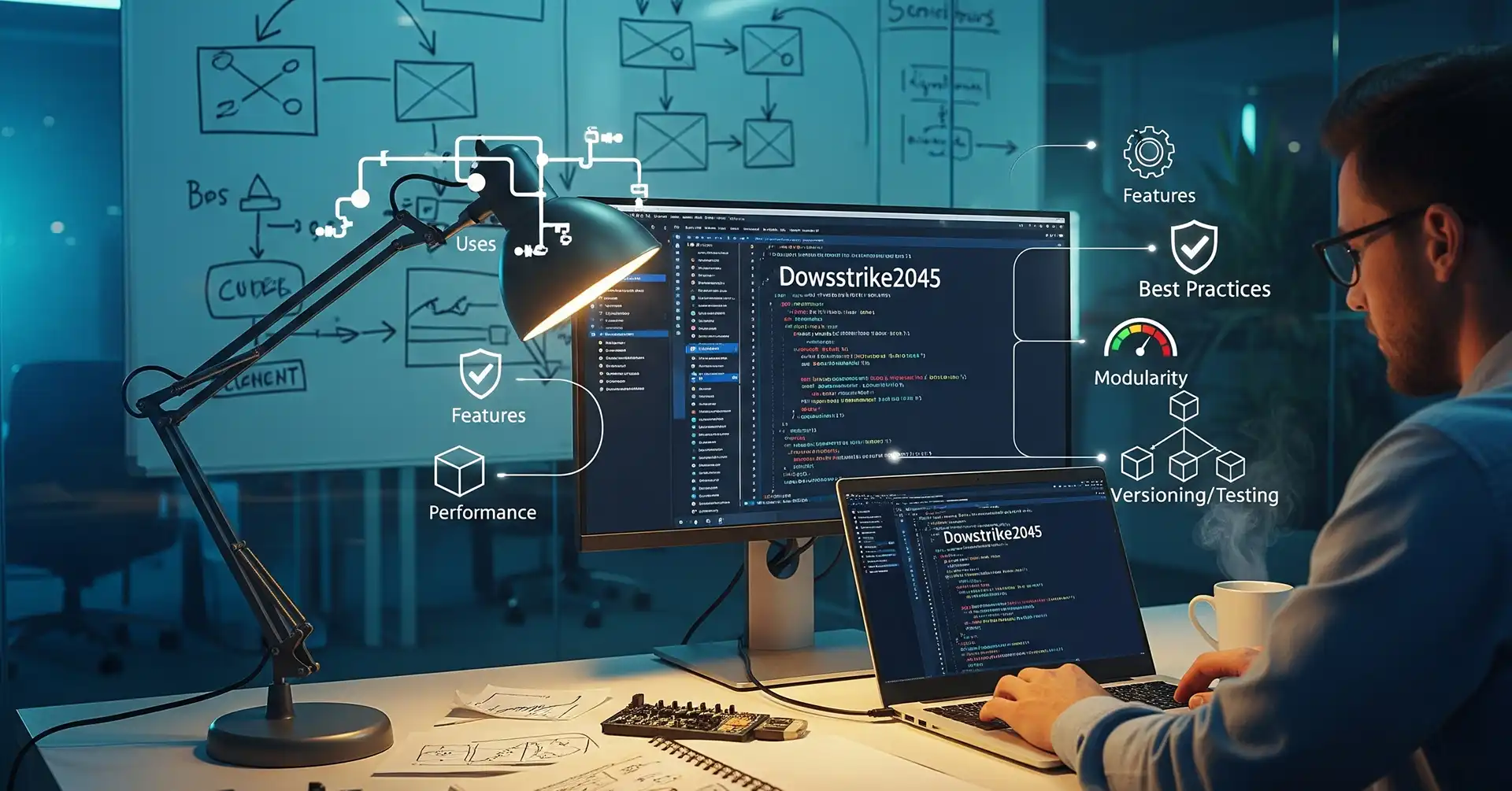
While the software dowsstrike2045 python update is not a ground-up redesign, it does bring several features that deserve attention.
Improved Error Handling
Error messages in earlier versions were often cryptic, forcing developers to dig through source code just to understand what went wrong. The updated version introduces clearer exception messages, along with optional verbose logging that pinpoints exactly where a failure occurred. This alone can save hours of debugging time, especially for teams managing large automated pipelines where a single silent failure can cascade into bigger problems.
Performance Optimization
Execution speed has also received attention. Certain internal functions that previously relied on repetitive loops have been refactored to use more efficient data structures. While the performance gains will vary depending on the specific workload, early testing suggests noticeable improvements in tasks involving large batch operations or repeated file parsing.
Security Patches
Security is rarely the most exciting part of any release, but it is often the most important. This update patches several vulnerabilities related to how external inputs are sanitized before being processed. For anyone using the framework in production environments where untrusted data might pass through automated scripts, this alone justifies prioritizing the upgrade sooner rather than later.
How to Approach the Update Safely
Even a well-tested update carries some risk, particularly if your existing codebase depends on undocumented behavior from previous versions. Here is a practical approach to rolling out the software dowsstrike2045 python update without disrupting your workflow.
Step One: Review Your Current Environment
Before touching anything, take stock of which Python version your project currently uses, along with any third-party libraries that interact closely with the framework. Documenting your current setup gives you a clear baseline to compare against if something unexpected happens after the update.
Step Two: Test in an Isolated Environment
Rather than updating a production system directly, create a virtual environment or containerized instance where you can apply the update in isolation. This lets you observe how your scripts behave without risking downtime on systems that matter. Running your existing test suite against the updated version is one of the most reliable ways to catch regressions early.
Step Three: Check Deprecated Functions
Like most mature frameworks, dowsstrike2045 occasionally deprecates older functions in favor of more efficient alternatives. Skimming the changelog for deprecated methods before updating can save you from runtime warnings or, worse, silent failures that only surface later in production.
Step Four: Gradual Rollout
Once testing confirms stability, consider a phased rollout rather than updating every instance simultaneously. Staggering the update across different servers or environments gives you a safety net in case an edge case slips through your initial testing.
Common Issues Developers Might Encounter
No update is entirely free of friction, and it helps to know what to watch for. Some developers working with the software dowsstrike2045 python update have reported minor conflicts with older plugin extensions that were built against previous internal APIs. If you rely on custom plugins, it is worth checking whether the plugin author has released a compatible version before upgrading your core framework.
Another area to watch is configuration file formatting. While the update mostly preserves backward compatibility, a few configuration keys have been renamed for clarity, which means older config files might need slight adjustments to avoid startup errors.
Practical Tips for a Smooth Transition
Here are a few things that consistently help when adopting any significant framework update, including this one.
First, always back up your configuration files and environment settings before starting. It sounds obvious, but it is the step most often skipped under time pressure.
Second, read through community discussions or forum threads where other developers share their experiences with the software dowsstrike2045 python update. Real-world feedback often surfaces edge cases that official documentation misses.
Third, keep your virtual environments isolated per project. This prevents a single update from unintentionally affecting unrelated projects that might depend on different versions of the same framework.
Fourth, schedule your update during a low-traffic window if you are working with production systems. Even minor updates can introduce brief service interruptions, so timing matters more than people often assume.
Looking Ahead
Framework maintainers rarely stop at a single update, and it is reasonable to expect that future iterations of dowsstrike2045 will continue building on the groundwork laid here. The current direction suggests a focus on stability and security rather than feature bloat, which is generally a good sign for long-term reliability. Developers who adopt the software dowsstrike2045 python update now will likely find themselves better positioned for whatever comes next in the framework’s roadmap.
It is also worth noting that community-driven feedback tends to shape these frameworks significantly. If enough users report friction points around specific modules, maintainers often prioritize fixes in the following release cycle. Staying engaged with community channels can give you early visibility into what might change next.
Final Thoughts
Keeping up with framework updates can feel like a never-ending task, but ignoring them entirely creates larger problems down the road, particularly around security and compatibility. The software dowsstrike2045 python update represents a thoughtful, incremental step rather than a disruptive overhaul, which makes it accessible to teams of nearly any size. Whether you manage a small personal project or an enterprise-level automation pipeline, taking the time to test and adopt this update properly will pay off in fewer headaches later.
Approach the transition methodically, test thoroughly in isolated environments, and keep an eye on deprecated functions before committing to a full rollout. Doing so ensures that your systems stay both current and stable, which is really the entire point of updating software in the first place.