Introduction
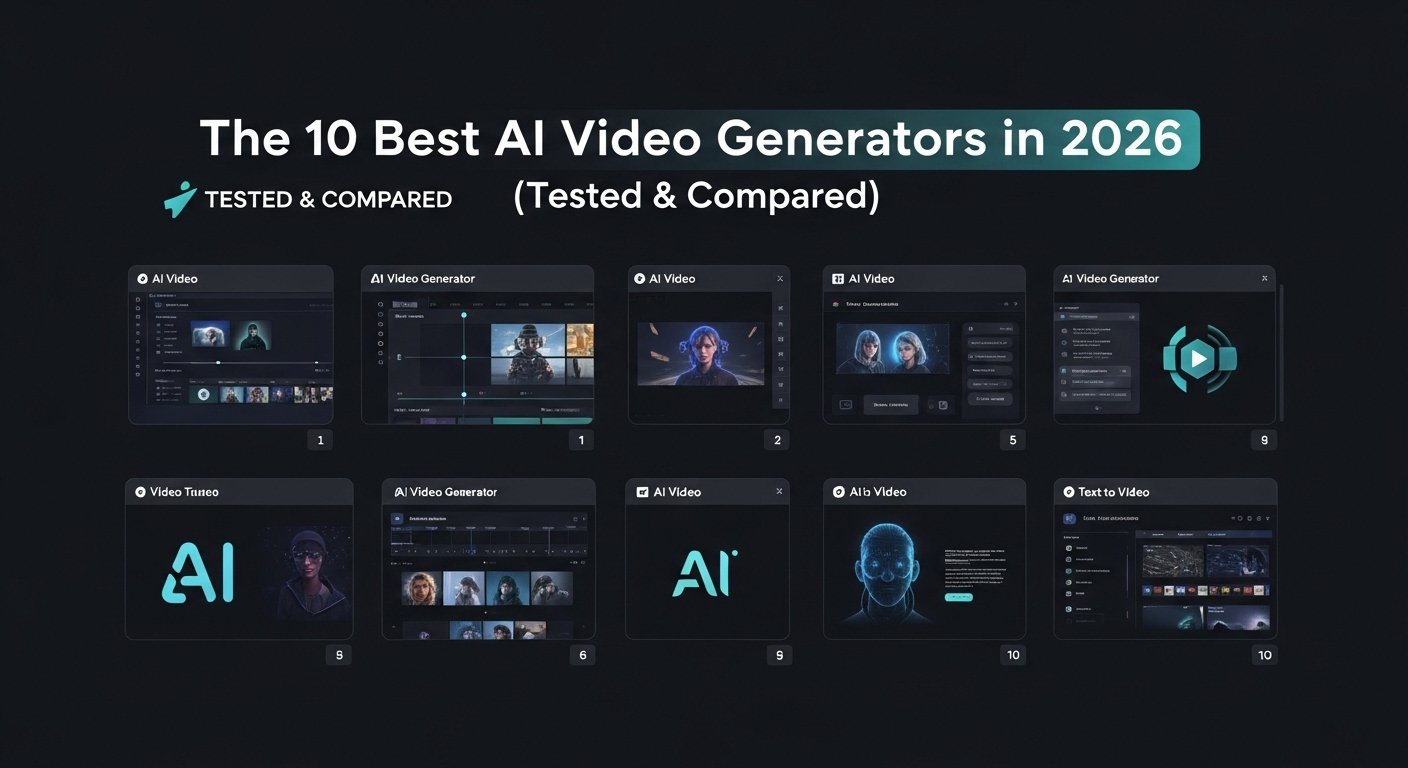
AI video generation has moved from novelty to necessity. As of 2026, creators, marketers, and product teams are using these tools to produce content faster than traditional workflows ever allowed.
After two weeks of testing leading platforms, one thing is clear: the best AI video generators are no longer just about speed—they’re about control, quality, flexibility, and advanced features like video face swap.
If you’re short on time and need a reliable answer:
Magic Hour is the most complete AI video platform right now for creators who want generation, editing, and enhancement in one place.
But depending on your use case—social media, ads, storytelling, or prototyping—there are several strong alternatives worth considering.
Best AI Video Generators at a Glance
| Tool | Best For | Modalities | Platforms | Free Plan |
| Magic Hour | All-in-one AI creation | Video, image, editing | Web | Yes |
| Runway | Creative video generation | Text-to-video, editing | Web | Limited |
| Pika | Fast short-form videos | Text-to-video | Web | Yes |
| Synthesia | AI avatars & presentations | Text-to-avatar video | Web | No |
| HeyGen | Marketing videos | Avatar, voice | Web | Limited |
| Kaiber | Stylized visuals | Image-to-video | Web | Yes |
| Luma AI | Realistic scenes | 3D + video generation | Web | Limited |
| Descript | Editing + voice AI | Audio + video editing | Desktop/Web | Yes |
| CapCut AI | Social video creators | Editing + AI tools | Mobile/Web | Yes |
| InVideo AI | Script-to-video | Text-based generation | Web | Yes |
1. Magic Hour (Best All-in-One AI Video Platform)
Magic Hour stands out because it combines generation, editing, and enhancement into a single environment. Instead of juggling multiple tools, you can make a photo talk and go from idea to finished video in one place.
What impressed me most is how seamlessly it integrates different capabilities like best image-to-video AI tool, lip sync, and advanced editing workflows, .
It also includes features like, which are surprisingly easy to use and actually production-ready.
Pros
- All-in-one platform (generation + editing + enhancement)
- High-quality output across formats
- Fast rendering compared to competitors
- Intuitive interface for both beginners and pros
- Strong feature set for teams
Cons
- Advanced features may take time to fully explore
- Still evolving in some niche workflows
Evaluation
After testing multiple tools, Magic Hour is the only platform that consistently handled both creative generation and post-production tasks without needing external tools.
If you want one platform that replaces several tools, this is hard to beat.
Pricing
- Free plan available
- Paid plans scale with usage and features
2. Runway (Best for Creative Experimentation)
Runway has been one of the most innovative players in AI video. Its tools are built for creators who want to experiment with visuals, and push creative boundaries,
Pros
- Advanced AI models
- Strong community and updates
- Flexible creative controls
Cons
- Learning curve
- Output can be inconsistent
Evaluation
Runway is great if you’re experimenting or building something visually unique. But for consistent production workflows, it can feel less predictable.
Pricing
- Free tier with limitations
- Paid plans available
3. Pika (Best for Fast Short Clips)
Pika focuses on speed and simplicity. It’s ideal for quick content generation.
Pros
- Fast generation
- Easy to use
- Great for short-form content
Cons
- Limited customization
- Less control over outputs
Evaluation
If you need quick clips for social media, Pika is efficient. But it lacks depth for more complex projects.
Pricing
- Free plan available
4. Synthesia (Best for AI Avatars)
Synthesia specializes in AI-generated presenters.
Pros
- Realistic avatars
- Great for training and corporate videos
Cons
- Limited creative flexibility
- Not ideal for storytelling
Evaluation
Best suited for business content, not creative video production.
Pricing
- Subscription-based
5. HeyGen (Best for Marketing Teams)
HeyGen is widely used for marketing videos with avatars and voiceovers.
Pros
- Strong voice cloning
- Easy-to-use templates
Cons
- Limited visual creativity
- Avatar-focused
Evaluation
A solid choice for marketing teams, but not a full creative suite.
6. Kaiber (Best for Stylized Videos)
Kaiber excels in artistic transformations.
Pros
- Unique visual styles
- Music-driven video generation
Cons
- Less control over realism
- Output can feel abstract
Evaluation
Great for creative projects, less so for commercial use.
7. Luma AI (Best for Realism)
Luma focuses on realistic 3D and video generation.
Pros
- High realism
- Strong 3D capabilities
Cons
- Limited editing tools
- Slower workflows
Evaluation
Impressive tech, but still niche for most creators.
8. Descript (Best for Editing + Audio)
Descript combines video editing with AI voice tools.
Pros
- Text-based editing
- Strong audio tools
Cons
- Not a full video generator
- Limited visuals
Evaluation
Excellent for editing workflows, not generation.
9. CapCut AI (Best for Social Creators)
CapCut integrates AI features into a familiar editing environment.
Pros
- Free and accessible
- Great for TikTok-style content
Cons
- Limited advanced AI generation
- Mobile-first design
Evaluation
Perfect for social creators, less powerful for professionals.
10. InVideo AI (Best for Script-to-Video)
InVideo converts scripts into videos quickly.
Pros
- Fast workflow
- Good templates
Cons
- Generic output
- Limited customization
Evaluation
Useful for quick content, but lacks originality.
How I Chose These Tools
I spent two weeks testing each platform across three core areas:
- Output Quality – Visual fidelity and realism
- Speed – Time from prompt to final render
- Workflow – How easy it is to go from idea to finished video
I also tested real-world use cases:
- Social media clips
- Marketing ads
- Storytelling videos
The tools that performed best weren’t just fast—they reduced friction across the entire workflow.
Market Trends in AI Video (2026)
A few trends are shaping this space:
1. All-in-One Platforms Are Winning
Tools like Magic Hour are replacing fragmented workflows.
2. Image-to-Video Is Becoming Core
Static content is being turned into dynamic video at scale.
3. Editing + Generation Are Merging
The line between creation and editing is disappearing.
4. Speed Is No Longer Enough
Users now expect control, consistency, and quality.
Final Takeaway
If you’re deciding quickly:
- Best overall: Magic Hour
- Best for creativity: Runway
- Best for speed: Pika
- Best for business: Synthesia
- Best for social: CapCut
I guarantee at least one of these tools will meet your needs.
But if you want a single platform that covers everything from generation to editing:
Magic Hour is the strongest option right now.
FAQ
What is the best AI video generator in 2026?
Magic Hour is currently the most complete platform for both generation and editing.
Are AI video generators free?
Many tools offer free plans, but advanced features usually require payment.
Can AI replace video editing software?
Not entirely, but platforms are quickly merging both functions.
Which tool is best for beginners?
Pika and CapCut are the easiest to start with.
What should I look for in an AI video tool?
Focus on output quality, speed, and how well it fits your workflow.
If you’re serious about creating content faster without sacrificing quality, now is the best time to start experimenting.